Should I sell my stocks? Three reasons, none of them a red screen
A 5% fall on EUR 10,000 is EUR 500, and selling locks it in. The good reasons to sell are about your plan and your timeline. What to check before you place the order.
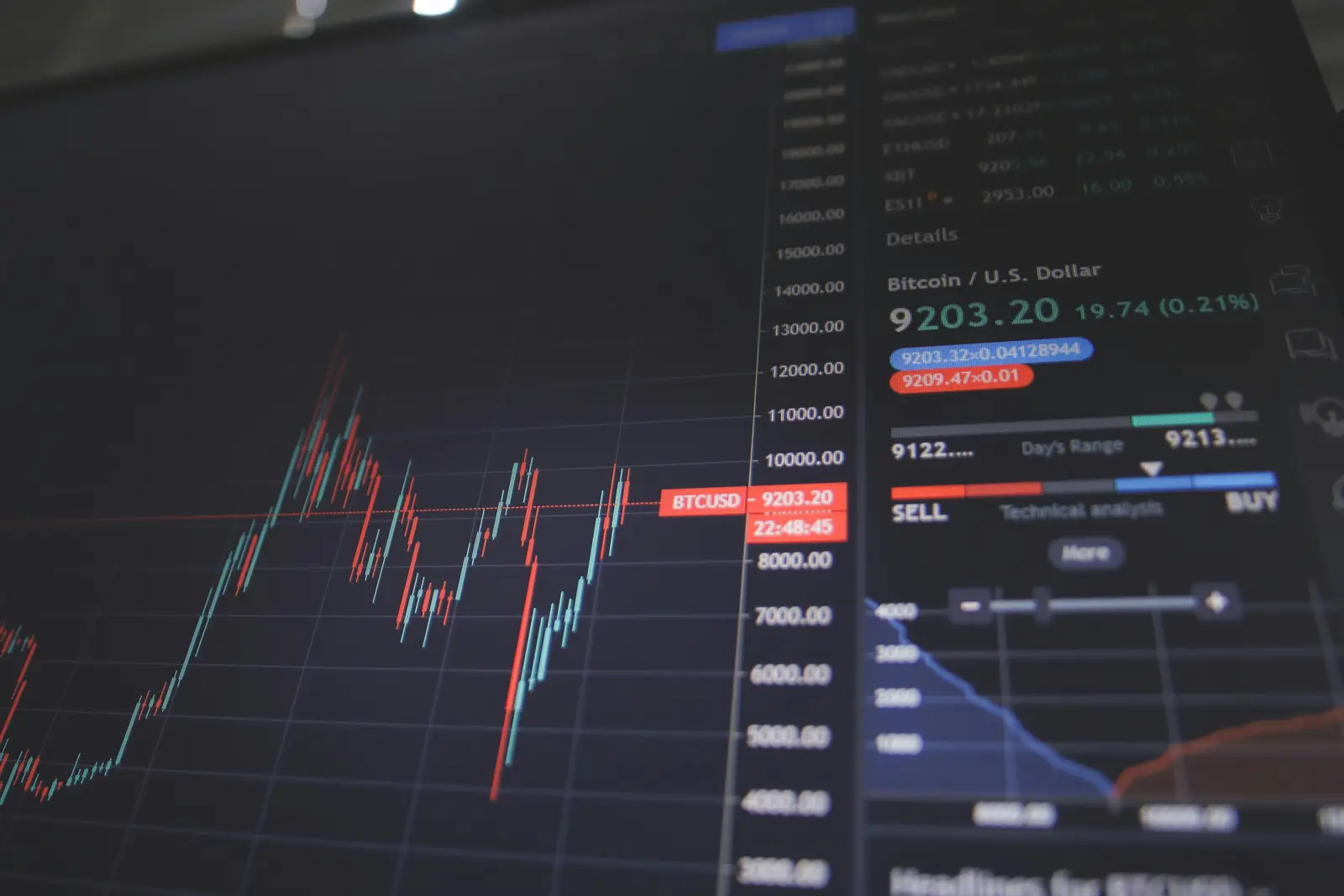
Global markets have swung hard this month. The US Nasdaq closed 5% below its level on 1 January, AI-related shares led the sell-offs, and the return of Jensen Huang as Nvidia's chief executive sent US indices back up. If your reflex is to sell, the question worth asking is what changed about the companies you own. Most weeks, the honest answer is nothing.
There are good reasons to sell shares. A falling price on its own is not one of them, because it converts a paper loss into a real one and hands you a second decision you probably haven't made: when to buy back. Getting both decisions right is harder than not selling at all.
What actually fell, and how much of it you own
Dan Coatsworth, head of markets at AJ Bell, says two of the most popular passive investments are global equity funds and funds tracking the S&P 500. Both hold the big technology companies in size, which is why both fell together. Fifteen years ago, US shares made up half of the MSCI World index, the standard benchmark for global stocks. They now make up 73%. Technology is officially 30% of the index; add Alphabet and Meta, which sit in communication services, and it is about 35%.
For a eurozone investor with one world ETF, that number is the whole story. Selling 'your stocks' this week means selling the same handful of US technology names you have been buying every month, along with a slice of everything else. Moving to cash swaps shares for a deposit account, and that is a different decision with its own return. If you would rather own something you don't have to rethink every quarter, a single global fund with a fixed monthly amount does that job.
| Measure | Figure | What it means |
|---|---|---|
| US shares as a share of MSCI World, 15 years ago | 50% | Half the global benchmark sat in one country |
| US shares as a share of MSCI World, now | 73% | A world tracker is mostly a US tracker |
| Technology weight in MSCI World, official | 30% | Sector classification only |
| Technology weight including Alphabet and Meta | About 35% | Both are classed as communication services |
| Nasdaq close on Friday | 5% below 1 January | Down for the year after a volatile month |
What a 5% fall costs on EUR 10,000
Put EUR 10,000 into a global tracker and a 5% fall leaves EUR 9,500. The EUR 500 is real money, and it is what you give up if the fund recovers after you sold at the bottom. Sell, watch it fall another 10%, and you will feel clever until you have to decide when to get back in. The news that makes you feel safe again usually arrives after the price has already moved.
Long-term money should be money you don't need for at least five years. If that EUR 10,000 was a house deposit for next spring, it was in the wrong place in October, not just in November. That is a lesson about the plan, and it is worth more than any call on where the Nasdaq goes next.
The currency layer euro investors forget
An S&P 500 tracker bought through a eurozone broker holds dollar assets. Your return is the index plus the euro-dollar move: a stronger euro trims a US rally, and a weaker euro cushions a US fall. Hedged share classes remove some of that swing and cost more to run. Look up the ongoing charge on the fund's key information document before you pay for hedging you don't need. If you already hold a hedged class, selling it now because of a US sell-off ignores the reason you chose it.
When selling is the right call
- You need the money within about two years: a house deposit, a tax bill, or the gap between contracts if you're self-employed.
- One holding has grown past the share of your portfolio you set for it. Rebalancing means selling some of it and buying the rest.
- Your income depends on the same companies. If you work in tech, your salary and your fund can fall in the same month.
- You bought with borrowed money and the lender can demand it back.
- A fall like this one would change your plans. Selling down to a size you can hold is better than selling everything after a bad week.
None of those reasons is 'the index is down'. A fall tells you what other people will pay for a company today. It becomes a reason to act when it changes what you can afford to do.
If you sell, decide where the cash goes
Cash is a position too. Once the money leaves the fund it earns whatever your bank pays, and you are comparing that with what you expect shares to return over the next decade, after fees. Write down the condition that would get you back in, and the date you'll review it. A plan that says 'I'll buy back when things calm down' has no trigger in it, so it never fires.
Three checks before you place an order
- Open the fund factsheet and read the top ten holdings. If you can't name the three biggest, you didn't know what you owned, and that is the thing to fix.
- Compare today's split with the one you wrote down. If US shares or technology have crept past it, rebalance back to the target.
- Look at the ongoing charge. Half a percentage point a year on EUR 10,000 is EUR 50 in year one, and it compounds against you from there.
Those three checks take about twenty minutes and settle most of the question, because selling is a decision about your plan.
If you own single shares instead of a fund
A fund spreads the risk across hundreds of companies; one stock can fall 30% and never come back. Nvidia's fall from its peak is the recent example, and it is a reminder that the size of a single position matters more than the news around it. If one company is more than a small slice of your savings, trimming it is a decision you can make in a calm week without predicting anything.
What this means for next month's contribution
If you invest EUR 300 a month, the same EUR 300 buys more units after a 5% fall than before it. That is the part of this you control completely, and it keeps working whether or not you are right about the next move. Stopping contributions until the headlines improve means missing the units bought at the lower price.
Frequently asked questions
- Should I sell my stocks if the market keeps falling?
- No, unless the fall has changed something in your own life. A lower price is the same company at a lower price. If you sell, you need to be right twice: once on the way out and once on the way back in.
- How much do I lose by selling after a 5% fall?
- The fall itself, in cash. On EUR 10,000 that is about EUR 500. The bigger cost is usually what you miss if the fund recovers before you buy back, plus any dealing fee and any tax your country charges on the gain.
- Is a global ETF safer than an S&P 500 one?
- More diversified, yes, though not by as much as the name suggests. US shares are 73% of the MSCI World index and technology is about 35% once you count Alphabet and Meta. Both funds rise and fall with the same companies.
- Should I stop my monthly investment while markets are volatile?
- No. A fixed monthly amount buys more units when prices are lower, which is the point of doing it monthly. Pausing means you only start buying again after the recovery.
- Do I pay tax if I sell shares or a fund?
- It depends on where you live. Capital gains rules on shares and funds differ across the eurozone, and some countries treat a switch between funds as a sale. Check your own country's rules or ask a tax adviser before selling a large holding.
Sources
How we reported this story
Written by Nora Hale, Editor, The Finance Clarity.
- Sourcing. Every figure traces back to a primary source: regulators, central banks, or audited company filings.
- Independence. Affiliate relationships never influence a verdict. Sponsored placements are always labelled.
- Accountability. Every article carries a named byline, and is corrected or updated when the underlying figures change.
Further reading

Anthropic at $97 is priced for a decade that may not arrive
Anthropic's record IPO gave day-one buyers a 17% gain and left everyone else paying $97 for a $1.76trn company that is not yet profitable. Size it small or skip it.

Pension lump sum at 55: what the 25% tax-free rule really costs
In the UK you can take 25% of each defined contribution pension pot tax free from 55, rising to 57 in April 2028. The other 75% is taxed as income, so the timing of each withdrawal sets the bill.
Property vs shares for income: what EUR 250,000 pays you a year
Property vs shares for income usually comes down to what's left after costs and tax. On EUR 250,000 both land near 2-2.5% net, but property costs 7-10% before it pays a cent.